‘Squid Toilet’ by Architect Fumihiko Maki
In the heart of Tokyo’s Ebisu district, within a modest neighbourhood park known for its playful octopus-shaped playground, stands a structure that gently reshapes our expectations of public design. Created by Fumihiko Maki as part of The Tokyo Toilet Project, this public restroom blends seamlessly into daily life.
Ebisu East Park is affectionately known as “Octopus Park” because of its playful octopus-shaped playground. Instead of imposing a structure onto the site, Fumihiko Maki chose to respond to its character.
His concept was simple yet thoughtful; “Create a space that functions both as a restroom and as a small park pavilion.” And the result is what many call the “Squid Toilet” — a light, playful counterpoint to the park’s identity.
From afar, it feels less like a facility and more like a small pavilion. Its soft, floating roofline hovers above the space, allowing it to coexist naturally with the surrounding greenery and activity. Rather than feeling like a closed-off utility building, the structure opens itself to the park, inviting not only users but also passersby to engage with it.
A Space That Feels Safe and Open
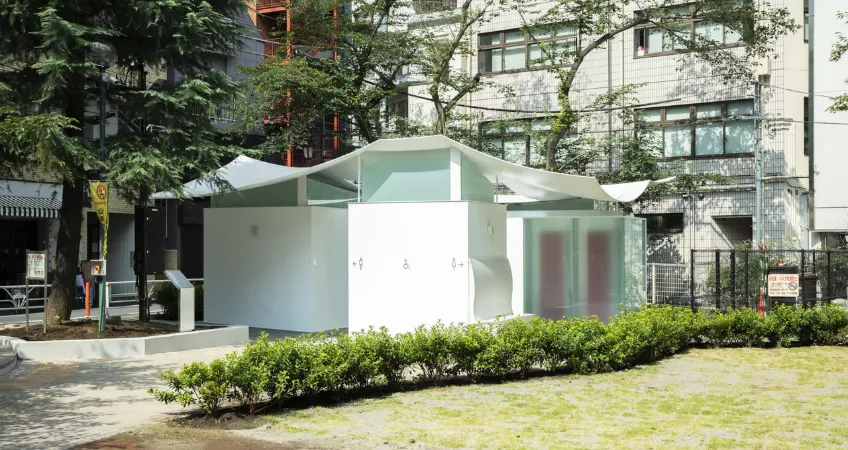
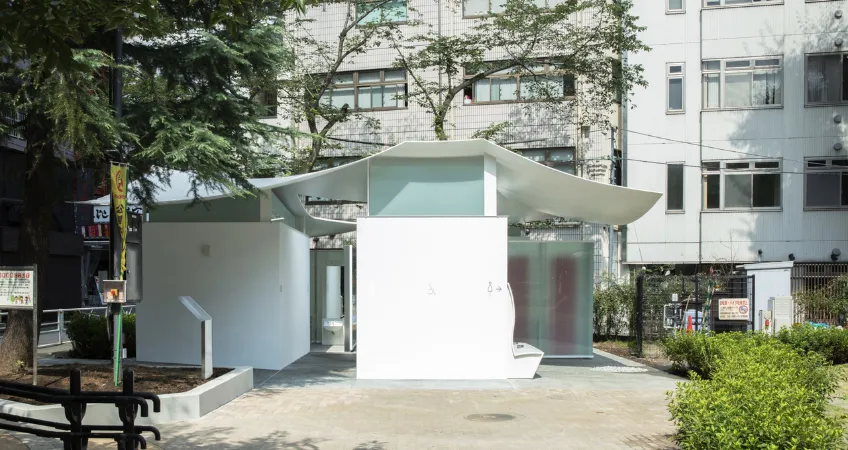
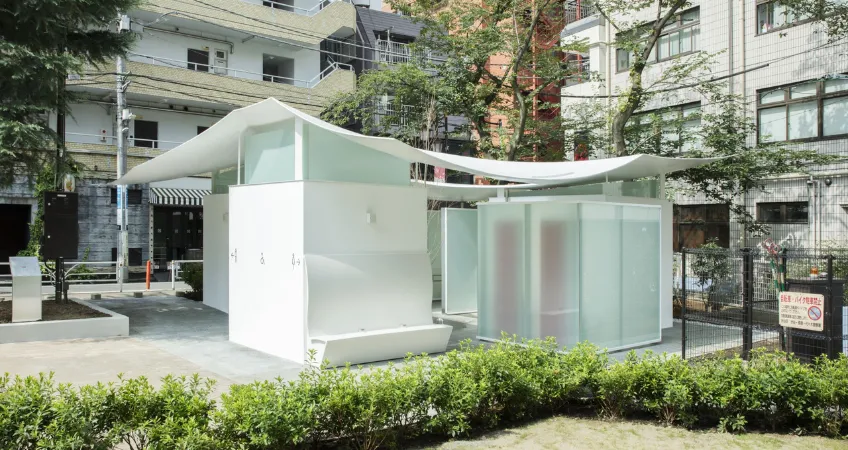
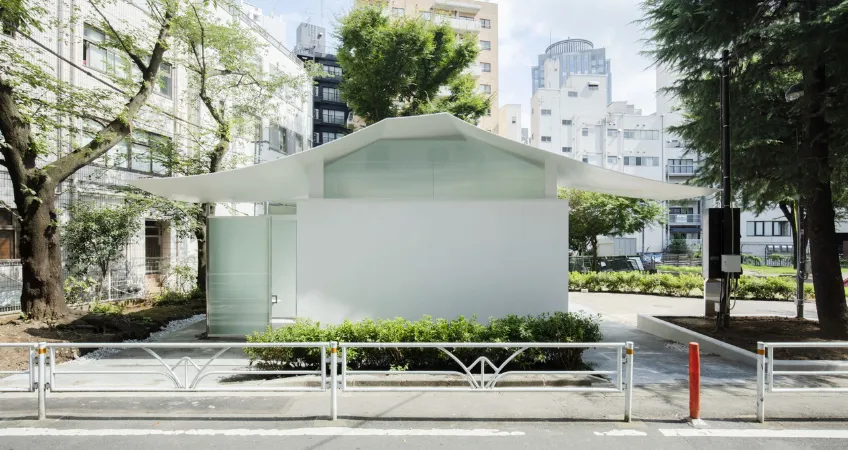
Overall design of the ‘Squid Toilet‘ project in Ebisu
Image Credit : Copyright © Shibuya City / The Nippon Foundation
As one approaches, the structure reveals its thoughtful openness where there is no single defined entrance. Instead, the design welcomes movement from multiple directions, allowing visitors to enter intuitively based on their path through the park.
This openness transforms the typical experience of a public toilet. What is usually hidden becomes visible, and with that visibility comes a sense of comfort. The layout avoids tight corridors and enclosed corners, replacing them with clear sightlines that make the space feel safe, approachable, and easy to navigate.
Design for Comfort and Safety
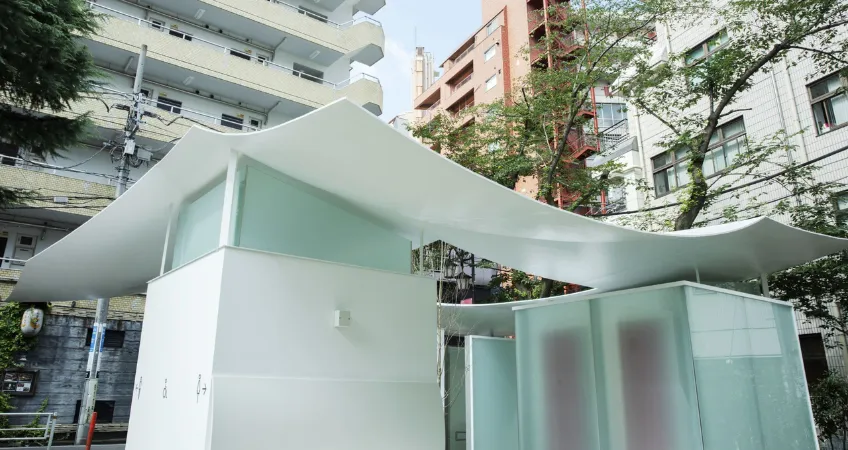
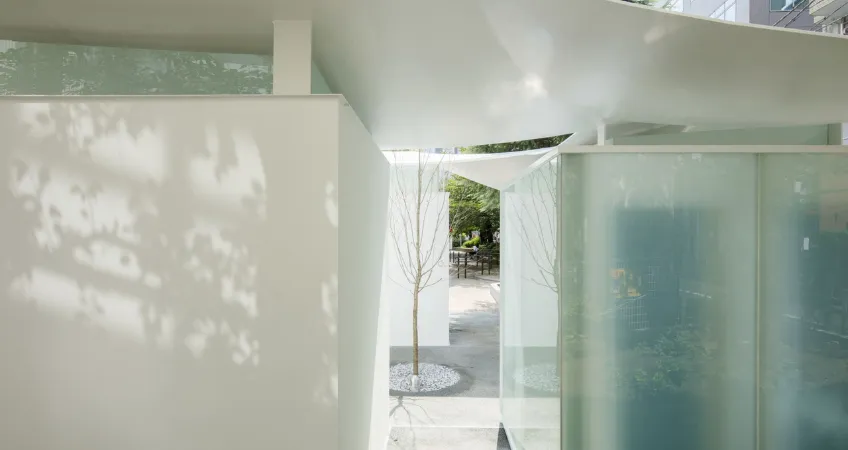
Exterior design of the ‘Squid Toilet’ project in Ebisu
All images in this article are sourced from The Tokyo Toilet project, © Shibuya City / The Nippon Foundation
Rather than organizing everything within a single enclosed block, Maki separates the functions into smaller volumes beneath a unifying roof. This decentralized layout allows each space to feel distinct while remaining connected.
As visitors move through the structure, the environment feels calm and legible. There is a natural flow between areas, and the openness ensures that users never feel confined. These subtle spatial decisions play an important role in shaping how people experience safety and ease — turning a routine visit into something far more comfortable.
In addition, light defines the atmosphere of the space. During the day, sunlight filters gently through translucent surfaces, casting a soft glow across the interiors. The effect is calming and serene, offering a rare sense of tranquillity in a public facility. Combined with thoughtful ventilation, the space feels fresh and breathable — qualities that elevate the entire experience.
Privacy Within Openness
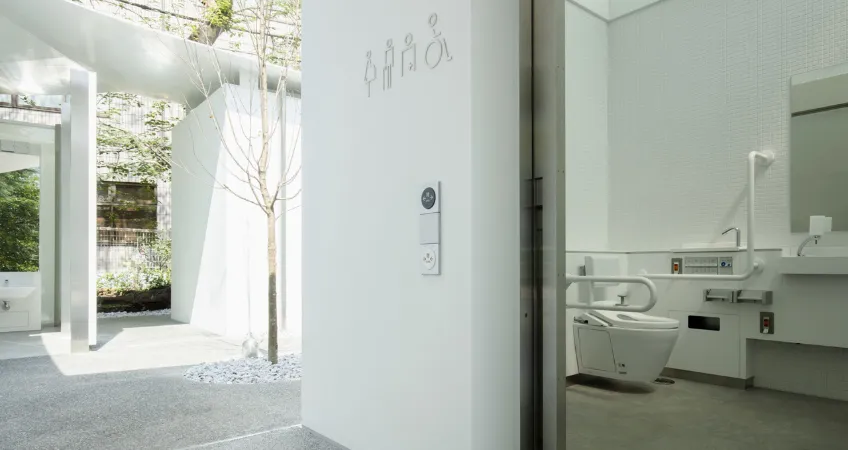
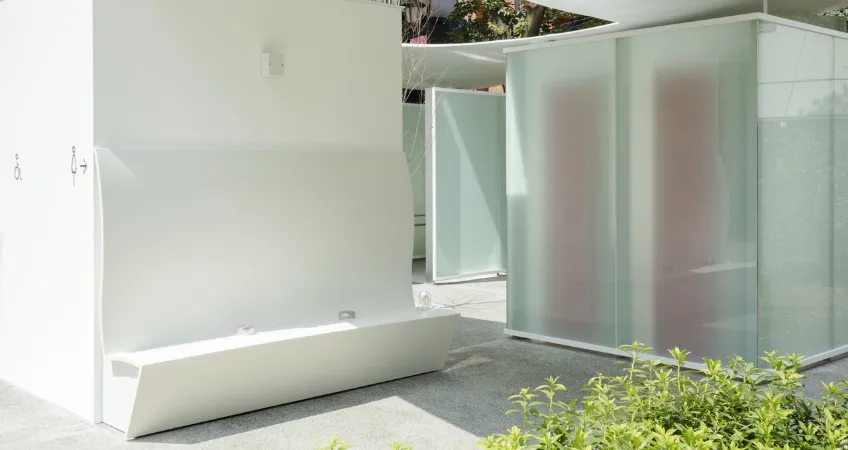
Toilet layout of the ‘Squid Toilet’ project in Ebisu
All images in this article are sourced from The Tokyo Toilet project, © Shibuya City / The Nippon Foundation
Within the pavilion-like structure, Fumihiko Maki brings a quiet shift in atmosphere as one enters the toilet area. The openness of the exterior gives way to a sense of calm enclosure, where privacy is carefully balanced without feeling isolated. Each cubicle is composed with clarity, using clean, durable materials that reinforce a sense of hygiene while remaining visually soft and approachable.
Movement through the space feels intuitive, with a layout that allows users to transition between cubicles and shared areas without confusion or crowding. Accessibility is seamlessly integrated, with larger, barrier-free cubicles and thoughtful features that accommodate a wide range of users, from children to the elderly.
The Ebisu East Park toilet challenges the way we think about ordinary spaces. It shows that even the most utilitarian structures can be designed with care, intention, and respect for the people who use them. By elevating a daily necessity into something thoughtful and well-crafted, Fumihiko Maki reminds us that good design is not about beauty or attention — it is about creating spaces that improve everyday life.
Disclaimer: This article includes references to publicly available information and images from The Tokyo Toilet project — an initiative by the Nippon Foundation and Shibuya City. To explore all unique toilet designs and learn more about the initiative, please visit the official website : https://tokyotoilet.jp/en/